Mostrando entradas con la etiqueta movimientos. Mostrar todas las entradas

21 noviembre 2011

Nada como el silencio de los medios para sembrar canales alternativos

Explica Jon Mitchell en Read Write Web cómo un pacto de silencio entre los grandes medios estadounidenses hoy tiene pocas garantías de éxito. De hecho si ningún diario trata de un movimiento como el Ocupa Wall Street estás convirtiendo en fuente alternativa a un sencillo espacio ciudadano como Storify.

Incluso para la gestión y coordinación policial de intervenciones, acallar la voz de los periodistas presentes, amplifica la noticia. Sin otra alimentación para los canales de nuevo estás incrementando el tráfico a esos otros sitios, por pequeños que sean, pero que Sí lo cuentan. Storify #Occupy.

Tapar o frenar el movimiento Occupy Wall Street ha generado un montón de micro-canales alternativos, les ha concedido un importante público y los eleva a un nivel de periodismo ciudadano, que poco tiene que envidiar al periodismo de investigación de los despachos en redacciones de altos edificios.

Con unos simples ecos mafiosos "que no se mueva mucho ese asunto" han terminado dándole el reconocimiento y audiencia que se han quitado de sus portales informativos.

How Storifying Occupy Wall Street Saved The News


Nota:

Storify no garantiza periodismo, ni que sea ciudadano. 

Al menos la "historiación" de la SER sobre las elecciones en España y la noche del 20 N no me merece los mismos comentarios. 

09 noviembre 2011

American Occupy Movement


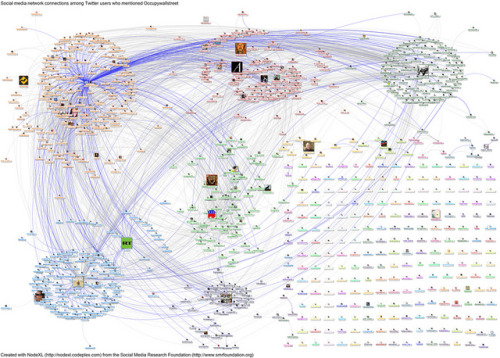
Foto de fllujos en Twitter infografía vía Fernand0
The Occupy movement, like Facebook, serves as a platform to bring together those who have been separated by geography and social stratification these past few decades. I have seen Occupy Portland serve as a place for WWII veterans to talk with Iraq War protesters (many of whom are veterans themselves); I have seen Generation X professors holding interactive educational workshops for blue-collar babyboomers who never had the opportunity to attend college; I have seen people with Ron Paul signs and people passing out literature for the Socialist Party having perfectly amiable conversations about the best way to end the Federal Reserve system. The vital conversations that haven’t been happening in American society the past few decades are happening now on Occupied grounds, and for the most part, they’re happening at a mature, respectful level. I suppose in that respect, Occupy may have little in common with Facebook—though that might have something to do with people generally being more polite offline than on. But it seems evident that Occupy owes its immediate success to filling the same void that Facebook seeks to fill. Call it the need for the tribe, or the longing for community; call it the absence of fellowship or a sense of having been unplugged from the collective unconscious. There is a feeling in the pit of one’s stomach that we have lost something, and only now, as we rediscover just what that something is, do we begin to realize the damage its absence has done to our civilization.
The Portland Occupier (2011, nov 9). American Occupy Movement and the way futureward, part I [blog post]. Retrieved from http://portlandoccupier.tumblr.com/post/12558363126/american-occupy-movement-and-the-way-futureward-part-i

APA citation blog, twitter

Post post:
Artículo de Ülrich Beck sobre la pérdida de legitimidad del sistema institucional para una mayoría social que sufren la crisis, traducido y publicado en el diario El País y recomendado por @antonigr: